PATERSON CAPITAL
Product strategy and design for internal financial tools
- CLIENT
- Paterson
- ROLE
- Independent Product Consultant
- Product Strategy, UX/UI Design and AI-Assisted Development
- BRIEF
- Design and build internal tools to help Paterson understand subscription activity, track investment recommendations and investigate portfolio performance.
Problem Statement
Paterson’s teams worked with different kinds of information: subscription exports, investment recommendations, portfolio changes and financial records. Each supported a different task, from identifying renewals requiring attention to understanding the reasoning behind an investment decision.
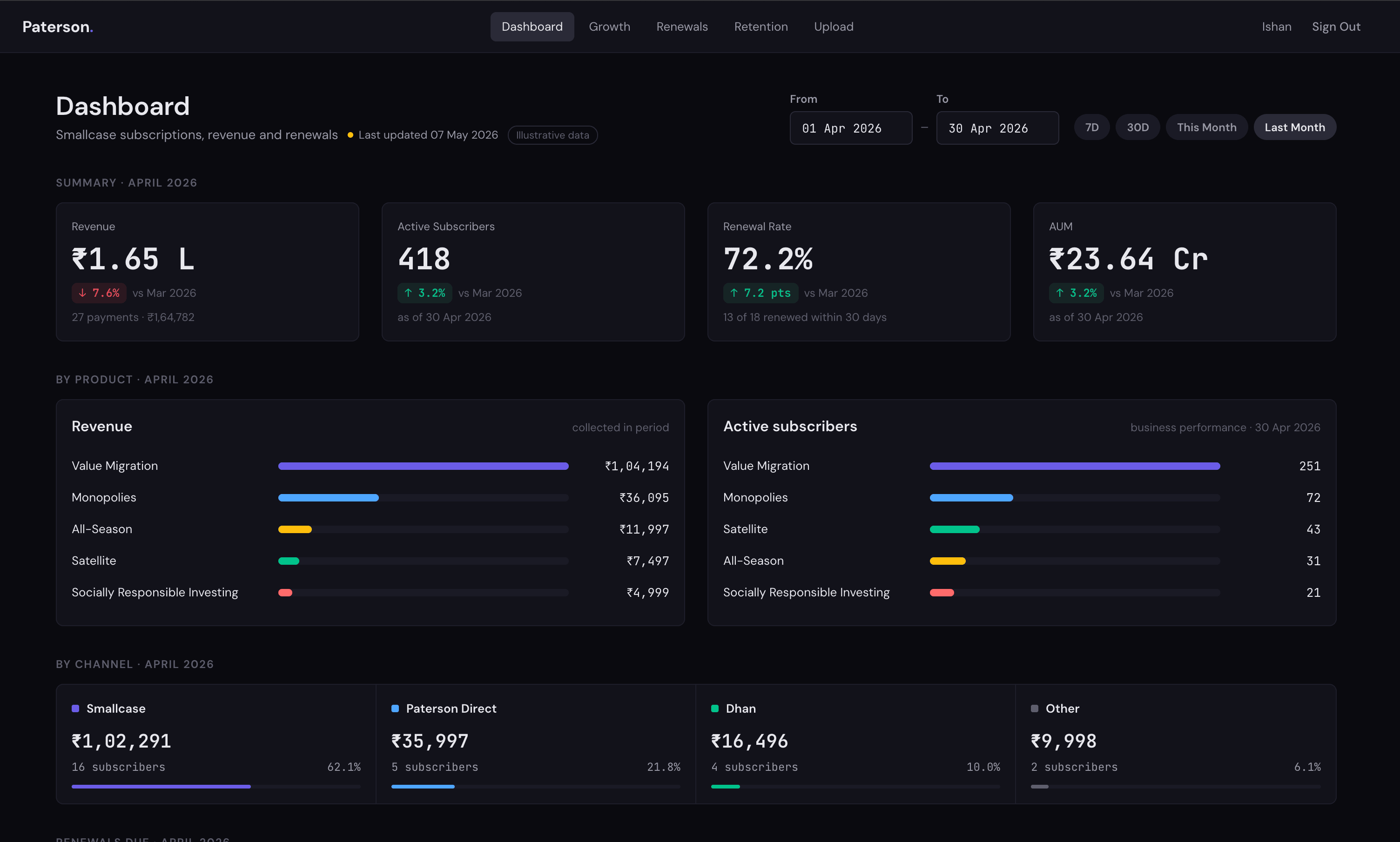
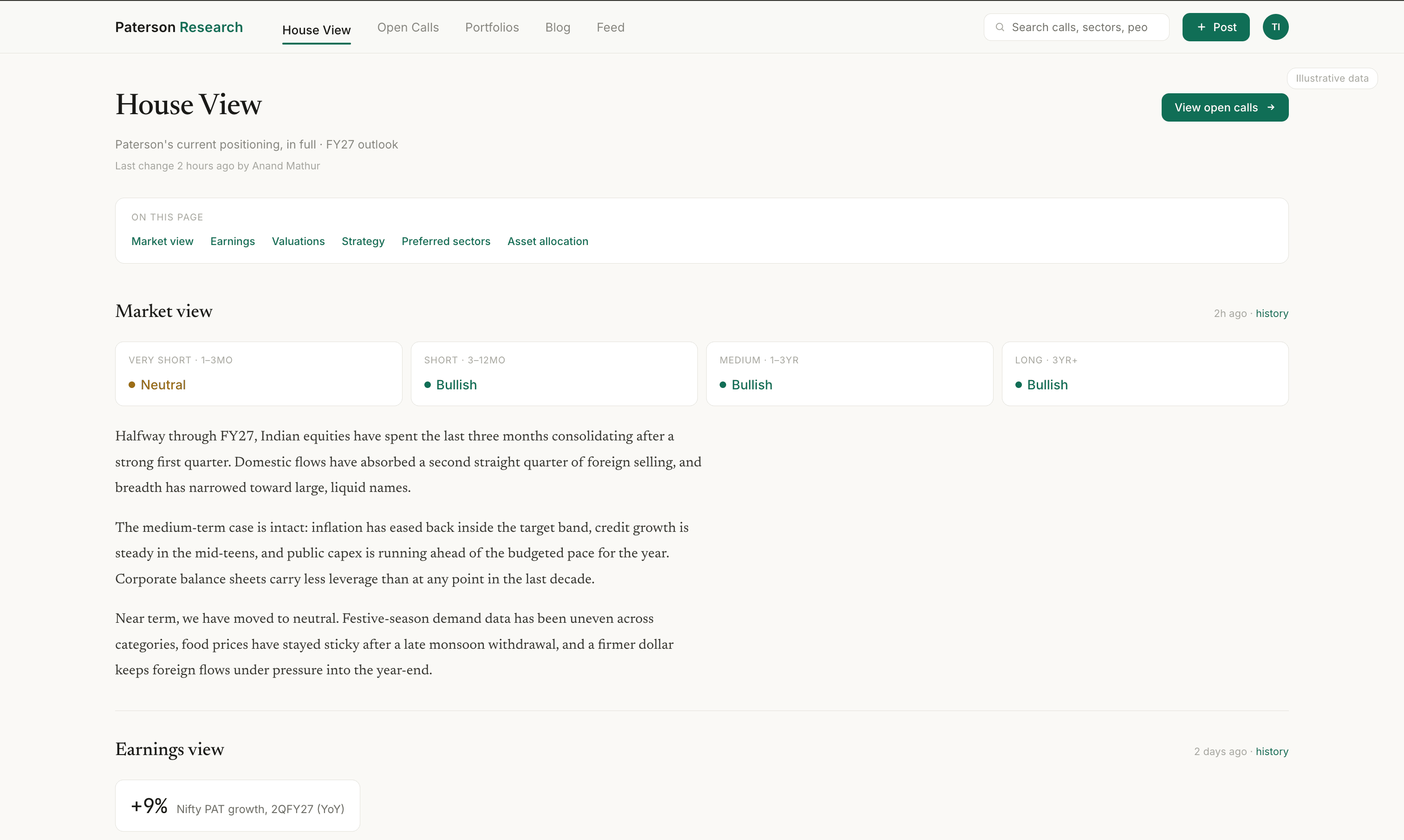
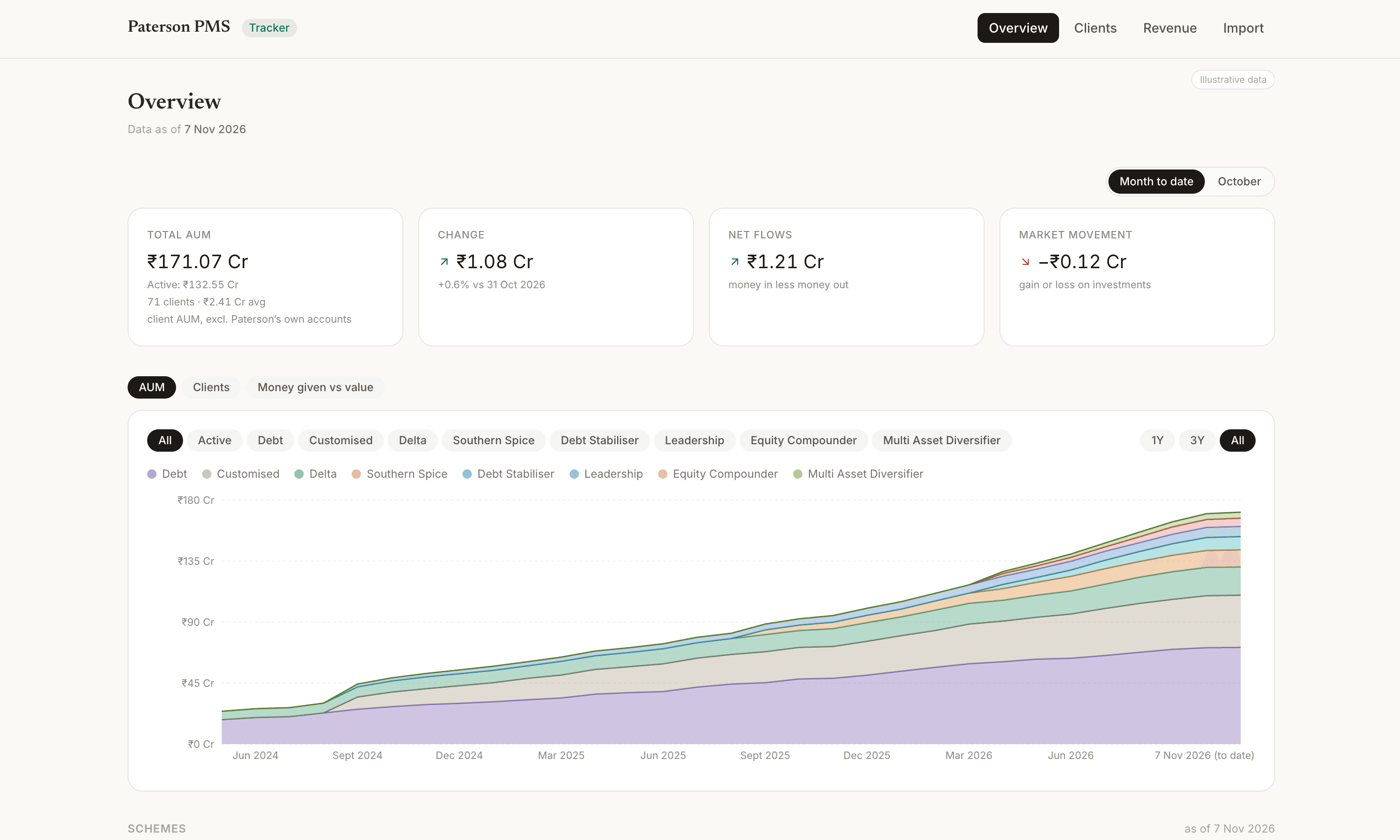
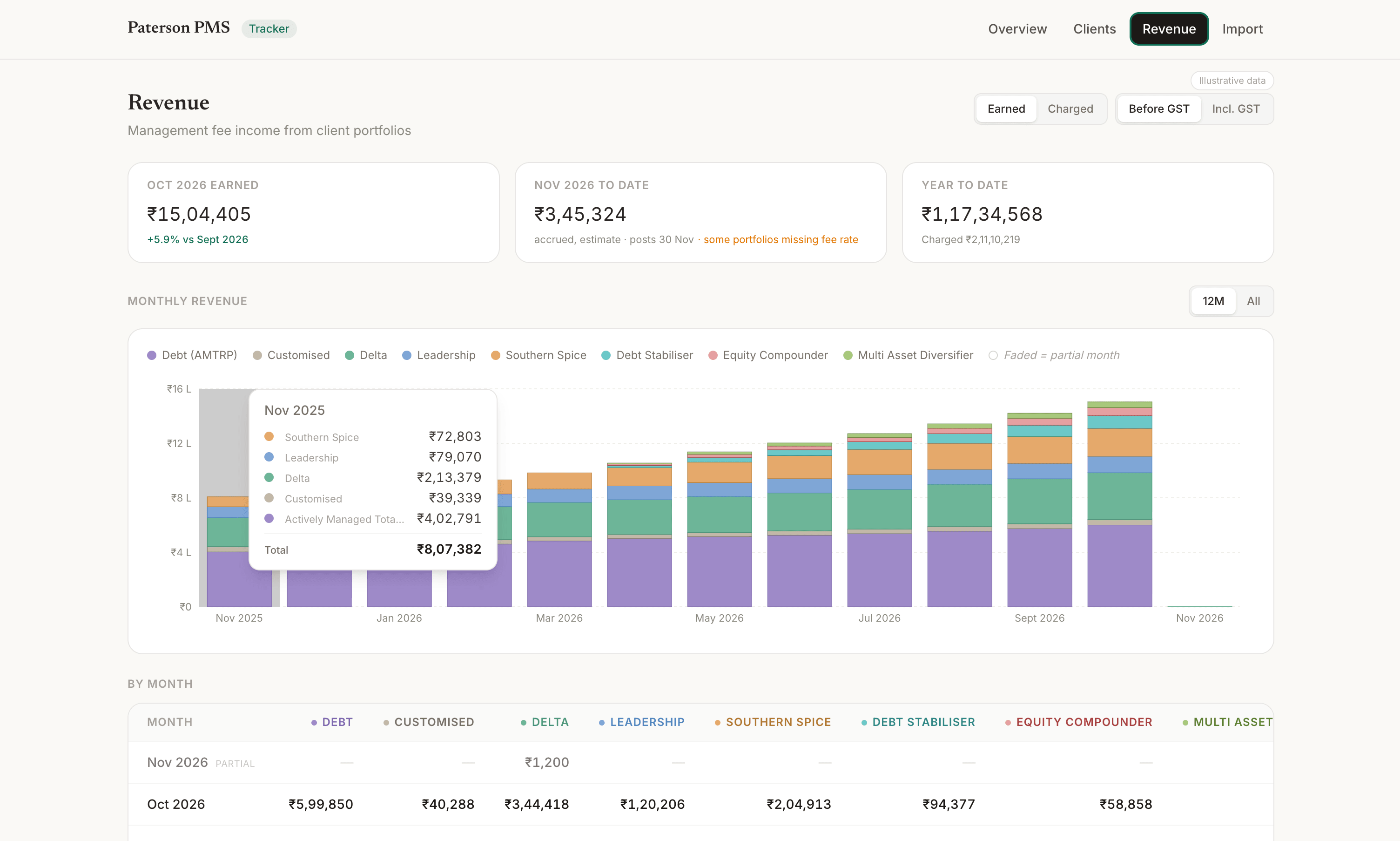
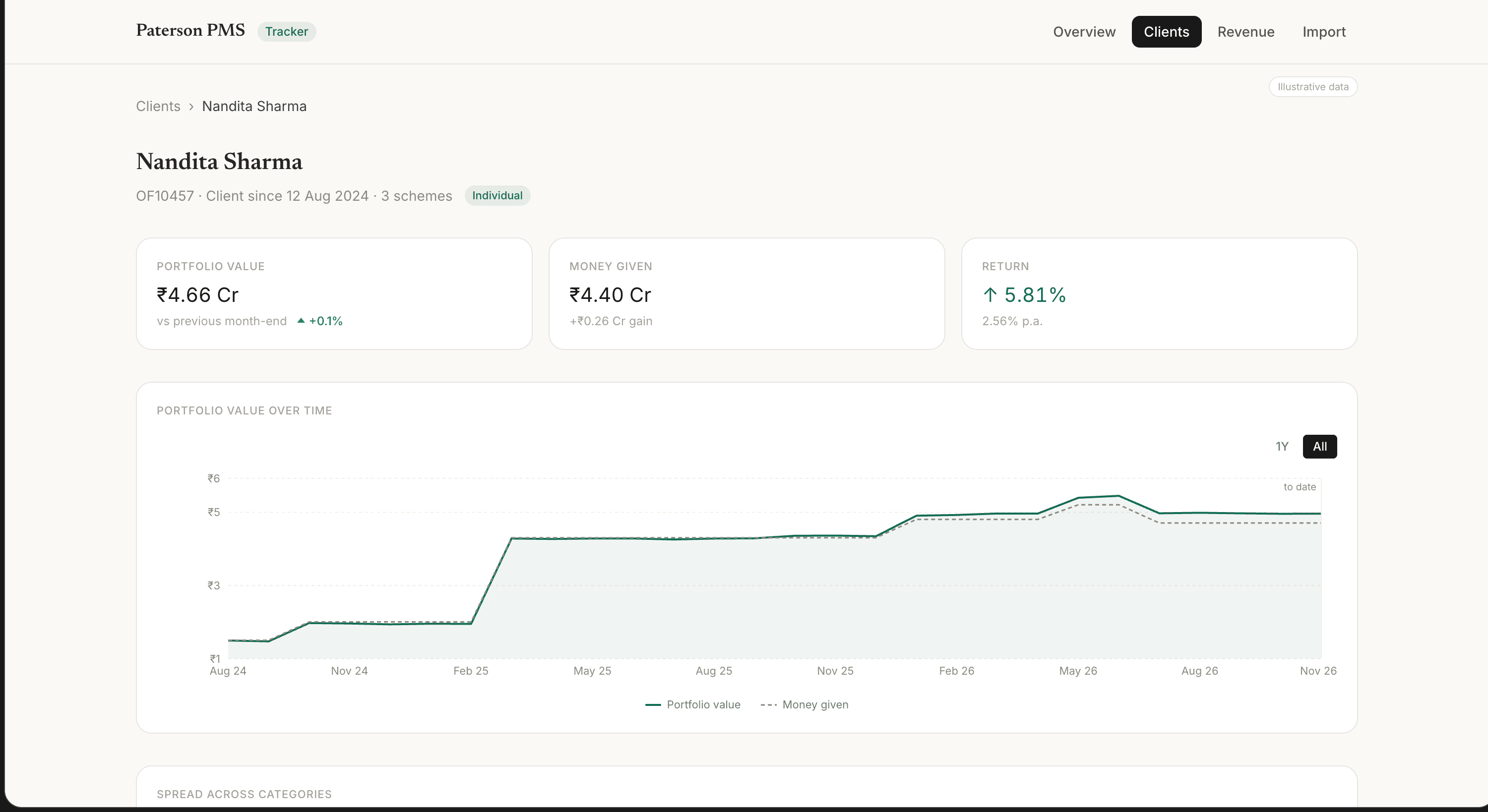
Across the engagement, I developed three independent products: an Ops Dashboard for Smallcase subscription analytics, a Research Hub for recommendations and portfolio decisions, and a PMS Dashboard for financial reporting.
The briefs evolved through client feedback as workflows, priorities and data limitations became clearer. My role was to translate those requirements into useful product structures and working interfaces.

Process
I worked directly with Paterson to understand the questions behind each brief, examine the available information and review working versions. The scope evolved through these conversations as workflows, data limitations and priorities became clearer.
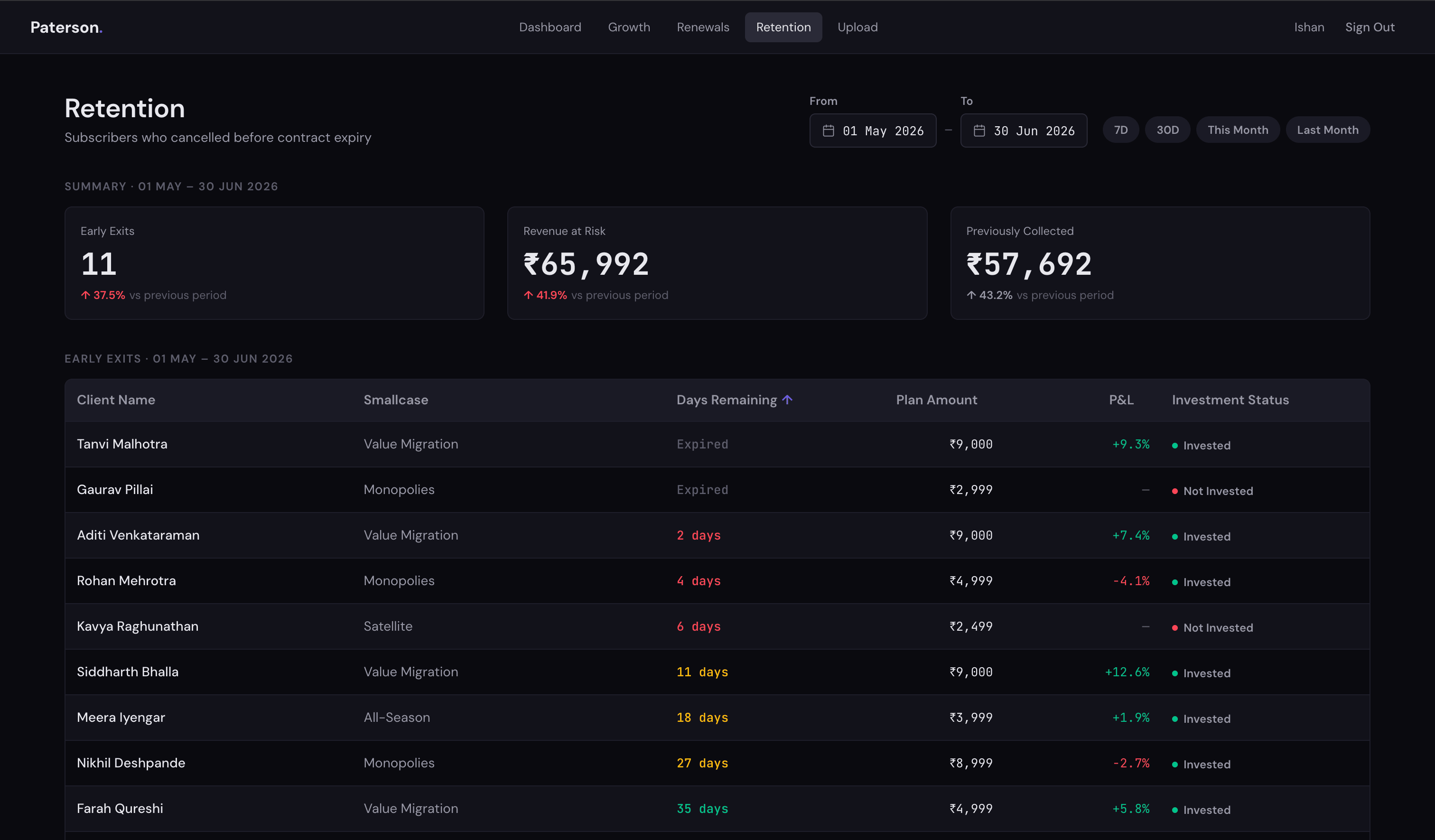
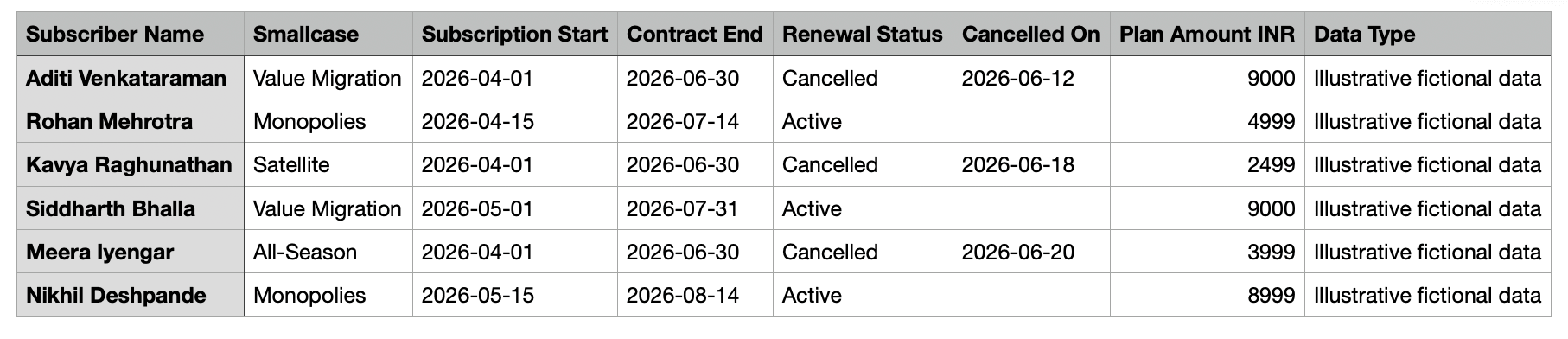
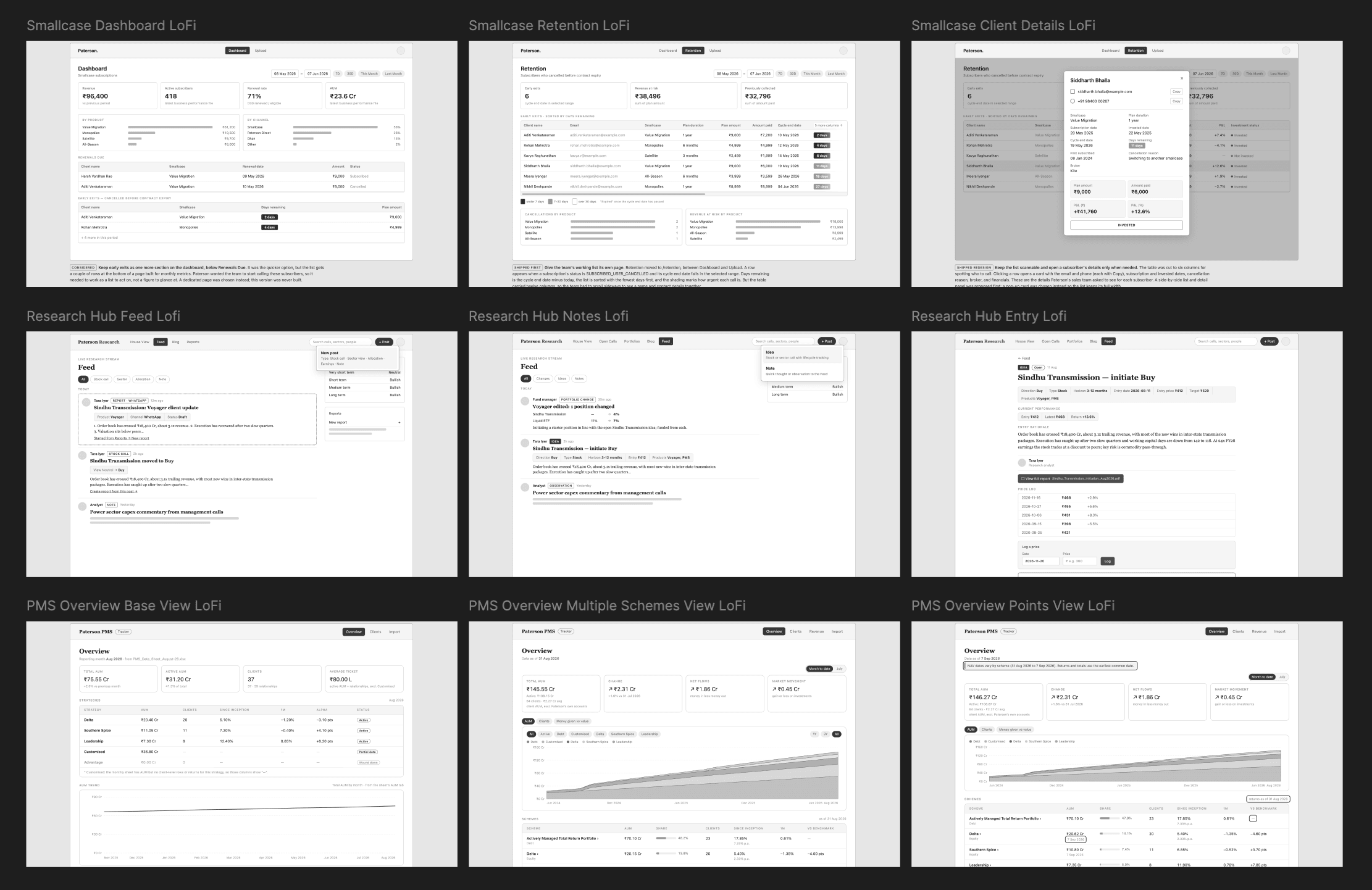
For the Ops Dashboard, three Smallcase exports provided the starting point. Client feedback brought retention into focus, leading to a dedicated working list and subscriber details that could be opened without navigating a wide table.
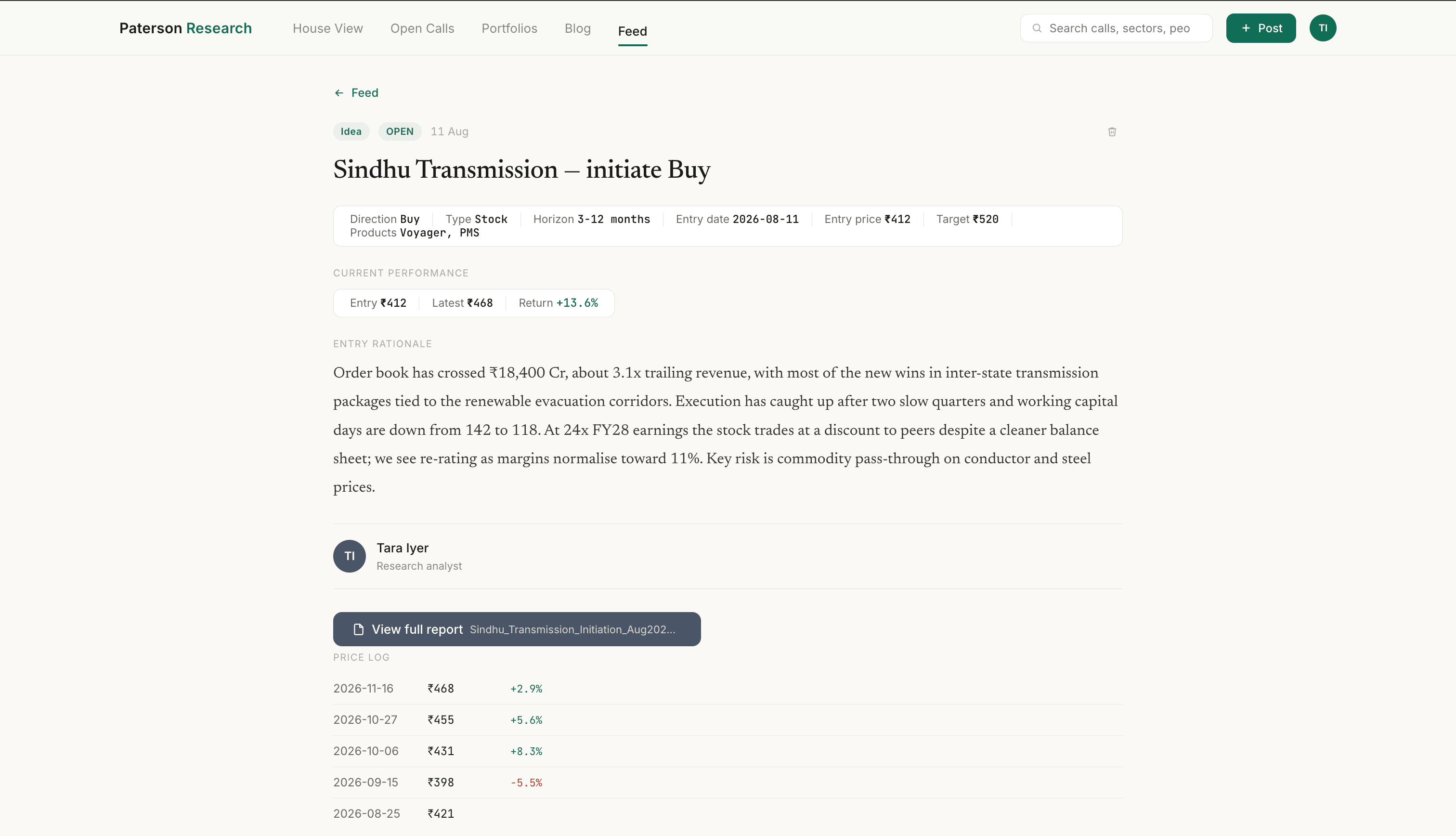
The Research Hub required closer attention to how recommendations became portfolio decisions. Workflow mapping challenged our initial top-down model, while client feedback clarified the structure: Investment Ideas and Portfolio Changes became distinct records, with the Feed reflecting their activity.
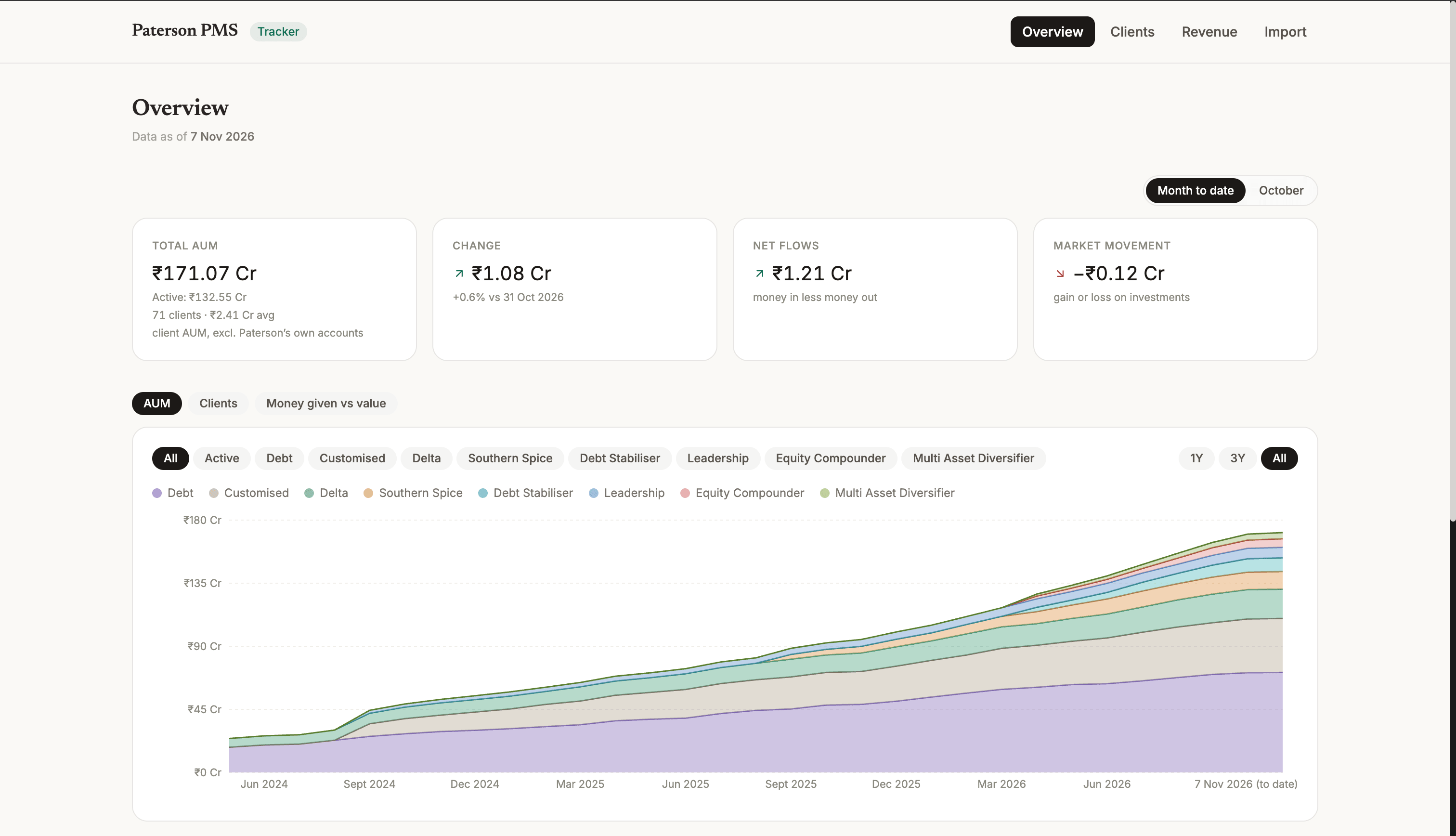
For PMS, I first questioned whether custom software was necessary. After considering lighter alternatives, Paterson chose a custom application. The initial phase focused on financial reporting, where comparisons between the monthly spreadsheet and custodian exports made reconciliation central to the work.
Across all three products, I used Claude to analyse requirements and explore approaches, and Claude Code to implement working versions. My role was to direct the work, evaluate the interfaces, test outputs and translate client feedback into the next iteration.
Decisions
The most consequential decisions shaped what people could do with the information: identify a subscription requiring attention, distinguish an investment recommendation from a portfolio action, and investigate a financial figure without losing sight of its limitations.
Making retention actionable
Client feedback established the need for a retention list the team could work through. I gave it a dedicated page, ordered records by time remaining and moved subscriber details into an expandable view. This kept the queue focused while making individual information accessible.
Giving each decision a clear home
In the Research Hub, client feedback clarified that the Feed should reflect activity rather than become another source of entry. I separated Investment Ideas from Portfolio Changes, giving recommendations and actions distinct records while preserving their visibility in the Feed.
Keeping uncertainty visible
For PMS, successful imports did not guarantee that the underlying figures agreed. We kept missing values distinct from zero, labelled inferred information and surfaced unresolved reconciliation differences so they could be investigated.
Directing and verifying implementation
These internal tools prioritised quick turnaround, clear workflows and usable information over extensive visual exploration. I used Claude and Claude Code to move into working software, then reviewed the interfaces, tested behaviour and incorporated client feedback.
I checked financial outputs against source data and challenged incorrect implementations. When Claude Code changed expected test values to make checks pass, I required the implementation to match the independently verified results.
Working Products
The project resulted in three independent internal tools, each shaped around a different part of Paterson’s work.
Outcome
The client is very happy with the deliverables. The scope evolved through feedback, resulting in three focused tools with distinct responsibilities.
Automated research propagation and cross-product discrepancy detection remained deferred, as did the PMS relationship-management workflow. Improvements in adoption, time saved and financial accuracy have not yet been measured.